Dover–Calais is a 24-hour route: ships sail at two and four in the morning too. For early starts towards the continent, holidaymakers with long onward drives and anyone watching the budget, these sailings are a quiet insider tip — empty decks, no check-in crowds, and the lowest fares of the day thrown in.
How the Night Crossing Works
From the price advantage to arrival at dawn — what defines the night ferry:
The price edge: off-peak pays
Sailings between roughly 10pm and 6am are consistently among the cheapest on the route — often 30–40% below the mid-morning slots. Irish Ferries in particular prices its night and early sailings aggressively. For a car plus two adults, the saving quickly reaches double digits each way.
Overnight check-in: faster than daytime
The process is identical — show the booking, clear both border controls, board — just without the crowds. At night, 60 minutes' buffer is usually plenty. Terminals and controls are staffed around the clock, and signage makes the approach easy even in the dark.
On board: quiet, not closed
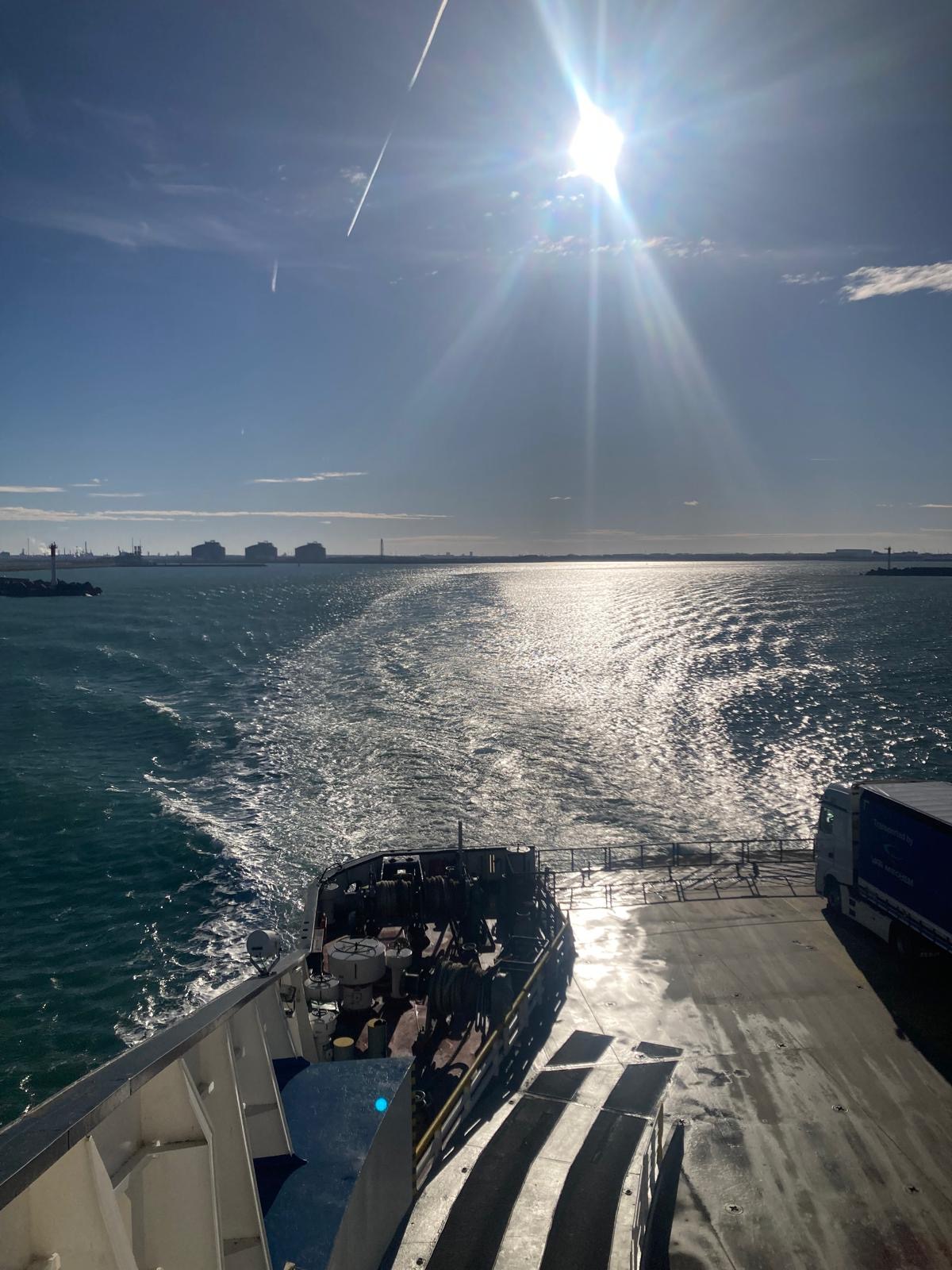
Even overnight, a café or bar operates in reduced form — a coffee is always available. Seating areas are empty enough to stretch out comfortably for the 90 minutes. And the open deck offers its own moment: the lights of Calais fading, the dark Channel ahead.
Dawn arrival: the time dividend
Leave Dover at 4am and you roll off in Calais around 6:30 local time (time zone +1!) — ahead of the traffic on the A16 and A26 south. For long onward drives through France, no other slot buys you more usable day.
Who it does NOT suit
With small children the night sailing usually means stress rather than savings, and if you've already driven all evening, take fatigue seriously: driving on tired is dangerous. The alternative: overnight near the port and take the earliest morning sailing (5–6am) — nearly as cheap, fully rested.
Calais–Dover ferry from £39 per person
31 daily crossings · 90 minutes · compare P&O, DFDS & Irish Ferries
Compare & book your crossing →