🏍 Travel guide · Motorcycle

Dover–Calais ferry by motorcycle – from ~€35

Riding to France? Motorcycles pay the lowest vehicle rate on the Channel. Live prices from all three operators, strap-down tips on deck, and everything about riding on the right after Calais.

~€35rider + bike, one way
90 mincrossing time
3operators take bikes
🔒crew straps bikes down
✅ P&O · DFDS · Irish Ferries🏍 Dedicated motorcycle rate🍝 Restaurant & open deck🧷 Ratchet straps provided
🔍 Search live motorcycle fares
1
0
€35
From / rider + bike
90′
Crossing time
31
Daily sailings
1st
Bikes often board first

Dover–Calais motorcycle ferry – today’s prices

Live prices from the booking API – the motorcycle rate is loaded automatically. Adjust the date and compare.

Depart CalaisArrive DoverDurationShipOperatorPrice/pers.Total

* Motorcycle rate, one way, in €. Sidecar/trike/trailer must be declared at booking – price may differ.

Why a motorbike is the cheapest way to cross with a vehicle

Motorcycles get their own reduced vehicle rate on Dover–Calais – off-peak crossings with a bike often start from around €35–50 (roughly £30–45) including the rider, while a car rarely dips below €90. All three operators – P&O, DFDS and Irish Ferries – carry motorcycles; sidecars, trikes and bikes with trailers can be booked too (declare them when booking).

OptionTypical price (rider + bike)Crossing timeWorth knowing
⛴ Ferry Dover–Calais (motorcycle)from ~€35–5090 minA real break from riding – restaurant & open deck
⛴ Ferry Dover–Calais (car)from ~€90–11090 minPriced per vehicle, not per person
🚂 LeShuttle / Eurotunnel (motorcycle)from ~€60–9035 minFaster, but you stay with the bike the whole time

💡 Verdict for bikers: the ferry is usually the cheapest option – and after hours in the saddle, 90 minutes of hot food, coffee and sea air on the open deck is a proper rest before switching to right-hand traffic in France. In a real hurry? Compare the Eurotunnel.

Strapping down, check-in and riding on the right – the full run-through
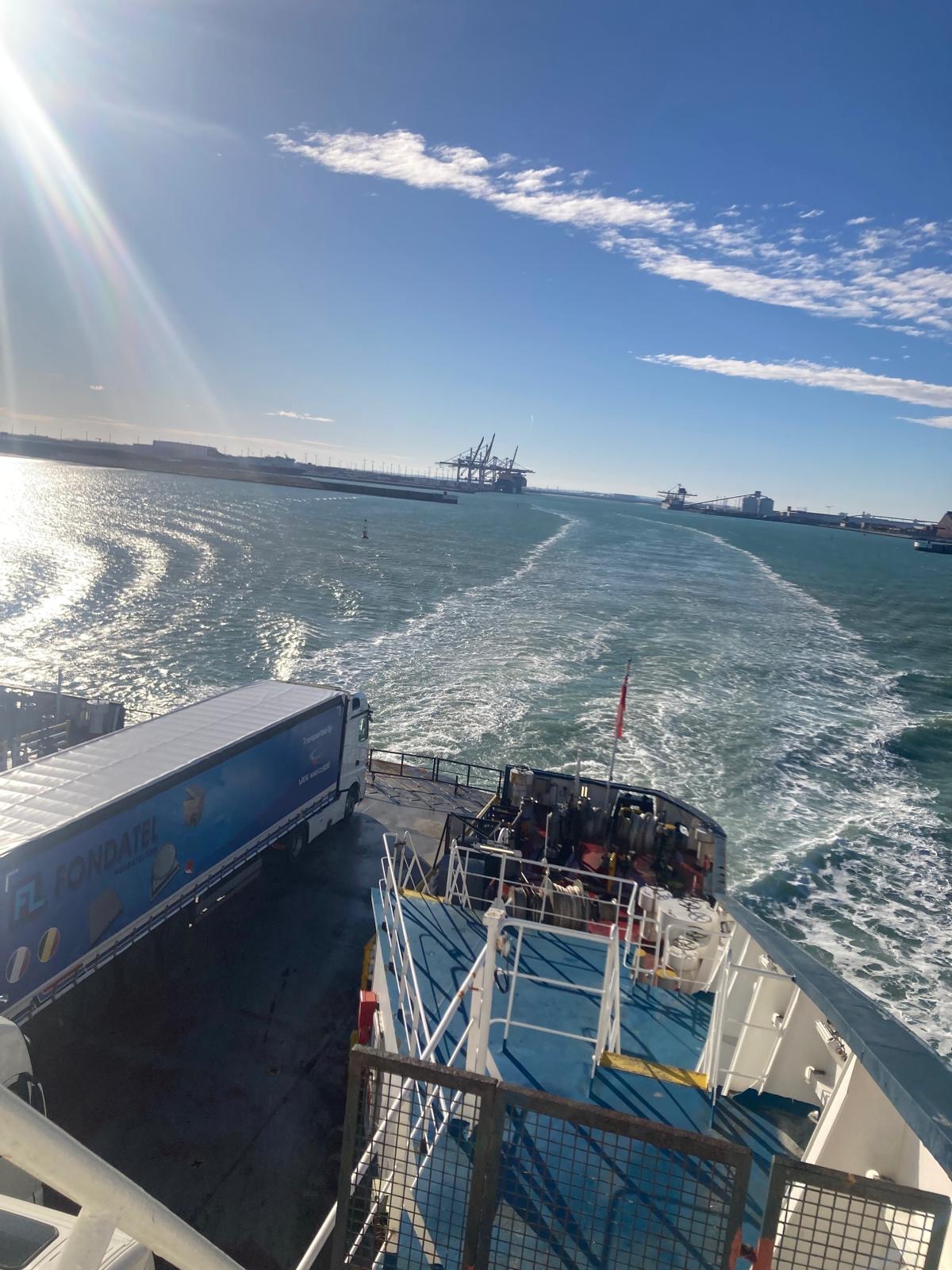
Vehicle loading at the ferry port – motorcycles usually board first

🏍 On board: how your bike is secured

  • Motorcycles usually board first and get a dedicated area on the car deck.
  • The crew provides ratchet straps and normally helps lash the bike down over the frame or forks. Bringing your own soft straps never hurts.
  • Park on the side stand, first gear in, steering lock off in case the crew needs to move it – confirm on deck.
  • Take your helmet, tank bag and valuables upstairs – the vehicle deck is closed during the crossing.
  • Panniers can stay on the bike; don't leave anything loose on the seat or rack.

💷 Booking the cheapest bike ticket

  • Sailings before 06:00 or after 20:00 can be up to 40% cheaper.
  • Travel Tue–Thu and avoid July/August weekends.
  • Book 3–4 weeks ahead – more savings tricks in our cheap ferry guide.
  • Sidecar or trailer? Declare the dimensions at booking or expect a surcharge at the port.

⏰ At the port with a bike

  • Check in at least 60–90 minutes before departure – 90–120 minutes in July/August.
  • UK and French border checks happen at the port: passport ready, gloves off, visor up.
  • EU visitors heading to the UK also need the electronic UK ETA – apply online in advance.
  • In strong winds bikes are loaded first – follow the marshals' instructions.

🇫🇷 Arriving in Calais: riding on the right

  • Right-hand traffic starts at the ramp – the first roundabouts out of the port are the real test. When in doubt, follow the vehicle ahead.
  • Speed limits in km/h: 50 in town, 80–90 on rural roads, 130 on the autoroute (110 in rain).
  • A hi-vis vest carried on the bike is compulsory in France; helmets must be ECE-approved.
  • French motorway tolls take contactless cards at the barrier – the narrow motorcycle lanes are usually the fastest.

🧳 Kit & Channel weather

  • Keep waterproofs accessible – conditions can differ sharply between Dover and Calais.
  • In storms (force 8+) sailings can be delayed; bikes are sometimes unloaded last when the deck is wet, so build in a buffer.
  • The open deck is the best seasickness prevention on a rough day – fresh air and horizon.

Hotels in Calais after you land

Late arrival or an early return sailing? A night in Calais makes the trip easier – many hotels offer secure parking for bikes. Adjust the dates top right.

More tips & areas: Calais accommodation guide · * Booked via partner – commission at no extra cost to you.

FAQ: motorcycles on the Dover–Calais ferry

Off-peak crossings start at around €35–50 (roughly £30–45) for rider + bike one way. Two people on one bike typically pay €70–150 total in summer. Motorcycles are significantly cheaper than cars – the live search above loads the motorcycle rate automatically.
Yes. Bikes are parked in a dedicated area of the vehicle deck and secured with ratchet straps – the operator provides the straps and the deck crew normally helps lash the bike down. Park on the side stand with first gear engaged.
Yes – P&O Ferries, DFDS Seaways and Irish Ferries all carry motorcycles between Dover and Calais. Sidecars, trikes and bikes with trailers can also be booked, but must be declared correctly at booking.
LeShuttle takes just 35 minutes but usually costs more – and you stay with the bike inside the train. The ferry is cheaper and gives you a 90-minute break with food and an open deck before switching driving sides. Full comparison: Eurotunnel guide.
At least 60–90 minutes before departure, or 90–120 minutes in July/August. Motorcycles often board first – arrive late and you miss the early boarding slot.
A valid passport, your driving licence and the vehicle registration document (V5C). UK riders don't need an IDP for France. Carry a hi-vis vest on the bike – it's compulsory in France – and check your insurance covers EU travel.

Book your Dover–Calais motorcycle crossing

Cheapest vehicle rate on the route · from ~€35 · compare P&O, DFDS & Irish Ferries.

* Affiliate link. We earn a small commission – at no extra cost to you.